

Nigeria’s insecurity challenge is no longer just a headline on the evening news, it is an economic emergency. Across the nation, armed banditry, terrorism, kidnapping, farmer-herder conflicts, oil theft, and communal violence are not only claiming lives but also destroying livelihoods.
While economic reports occasionally celebrate GDP growth, millions of Nigerians are asking a more pressing question:
Can a nation truly prosper when fear has become the price of earning a living?
The answer lies not just in statistics but in the daily realities of farmers abandoning their lands, factories reducing operations, transporters paying illegal levies, businesses relocating, and investors choosing safer destinations.
Nigeria’s economic and security crises are deeply intertwined.
According to the National Bureau of Statistics (NBS), 133 million Nigerians—about 63% of the population—live in multidimensional poverty, lacking adequate access to healthcare, education, sanitation, housing, and employment opportunities.
The National Bureau of Statistics has also consistently reported unemployment and underemployment among young Nigerians as significant development challenges, with millions of youths struggling to find decent work.
Meanwhile, the World Bank estimates that over four in every ten Nigerians live below the national poverty line, despite the country’s enormous natural and human resources.
These are not isolated figures, they represent families skipping meals, graduates unable to find work, businesses closing their doors, and communities trapped in a cycle of fear and economic decline.
Nigeria’s food inflation is not simply a consequence of economics, it is also a consequence of insecurity.
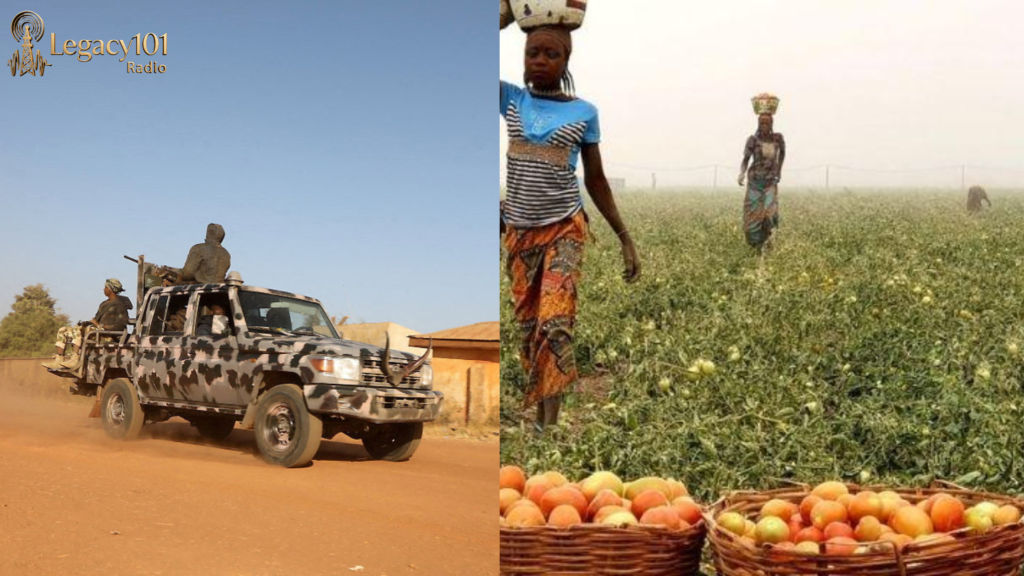
Thousands of farmers across parts of the North Central, North East, and North West have either abandoned their farms or drastically reduced cultivation because of attacks, kidnappings, and extortion.
Some are forced to pay illegal “taxes” to criminal groups before accessing their own farmland. Others simply stay away to protect their lives. It becomes impossible to discuss food security without discussing national security.
After all, a nation cannot harvest prosperity from abandoned farms.
Small and Medium Enterprises (SMEs) account for the overwhelming majority of businesses in Nigeria and provide employment for millions.
Yet these same businesses are among the biggest victims of insecurity. Many shop owners close earlier than planned. Perhaps one of the most uncomfortable questions Nigeria must confront is this:
Has insecurity become an unintended employer?
Millions of young Nigerians remain unemployed or underemployed. For many, legitimate opportunities are scarce. Criminal networks, extremist groups, kidnappers, and illegal mining syndicates exploit this desperation, camouflaging to provide what the government fail to example income, purpose, belonging…)
This does not excuse criminality, but it helps explain why vulnerable youths become easy recruitment targets.
What should come first, security, or poverty? This question has divided economists, security experts, and policymakers for years. Does poverty create insecurity? Or does insecurity create poverty?

Nigeria has introduced numerous economic reforms intended to improve long-term growth. Yet reforms struggle to deliver meaningful benefits when insecurity undermines productivity.
A new road means little if transporters fear using it. Agricultural subsidies have limited impact if farmers cannot safely cultivate. Industrial policies cannot succeed if factories spend more on security than expansion.
Economic policy and security policy must work together, as development cannot survive where violence dominates.
Until Nigeria secures both lives and livelihoods, unemployment and poverty will continue to grow together, feeding the very insecurity the nation seeks to defeat.
The choice before Nigeria is clear: Continue managing the symptoms, or finally confront the disease.
Leave a Reply